Blog

Charting the Depths: A Comprehensive Guide to Hydrographic, Bathymetric, Offshore Surveying, and Geodetic Control (Part 1)
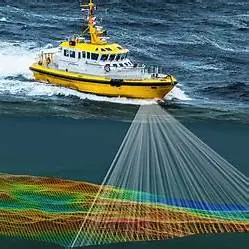
Surveying the Seas: Hydrographic, Bathymetric & Offshore Surveying with Geodetic Control Human civilization has long been drawn to the oceans – for exploration, trade, and resources – yet mapping and understanding the seafloor and offshore environment has been a centuries-long challenge. Hydrographic surveying, bathymetric surveying, and offshore surveying are critical disciplines that allow us to […]

Geoid vs Ellipsoid vs Topographic Surface

Published: Olalekan Odunaike  |  Author: Omar Ahmed  |  Source: LinkedIn Tags: #definitions, #earth, #ellipsoid, #geoid, #hydrographic, #hydrospatial, #survey, #topo_surface Technical Explanation What the Image Shows: “Geoid vs Ellipsoid vs Topographic Surface” The image is an educational comparison of three distinct “surfaces” used to describe the Earth in geodesy and hydrographic/hydrospatial practice: Ellipsoid: a smooth, mathematically […]

MBES Survey System Integration

Published: Olalekan Odunaike  |  Author: Adnan Ali  |  Source: LinkedIn Tags: #bathymetry, #gnss, #gyrocompass, #hydrographicsurvey, #hydrography, #marinesurvey, #marinetechnology, #mbes, #mru, #multibeamechosounder, #offshoresurvey, #seafloormapping, #soundvelocity, #surveysystems, #twozansurveys Technical Explanation Overview of the Image: “MBES Survey System Integration – Sensors, Connections, and Data Flow” The image is a simplified system diagram showing a typical Multibeam Echo Sounder […]

Vessel Coordinate Frames

Published: Olalekan Odunaike  |  Author: Jonathan Beaudoin  |  Source: LinkedIn Technical Explanation Technical Explanation: Vessel Coordinate Frames, Conventions, and Why They Matter in Hydrography and Geodesy What the Image Shows The primary graphic (titled “Human Error with Vessel Configuration”) is a cautionary schematic about a recurring failure mode in hydrographic survey integration: transcribing vessel configuration […]

Reducing Tide Gauge Observations to a Vertical Datum

Published: Olalekan Odunaike  |  Author: Muhammad Khallaf  |  Source: LinkedIn Tags: #abudhabi, #bathymetry, #coastalsurvey, #egypt, #geophysics, #hydrographicsurveying, #hydrography, #jordan, #lat, #marine_survey, #marinesurvey, #msl, #multibeam, #oceandata, #oceanmapping, #off_shore, #physics, #rbr, #saudiarabia, #surveying, #tidegauge, #trimbler12i, #uae, #verticaldatum Technical Explanation Technical Explanation: Reducing Tide Gauge Observations to a Vertical Datum (MSL/LAT) 1) What the image shows (conceptual geometry) […]

LONG BASE LINE (LBL)

Published: Olalekan Odunaike  |  Author: Ahmed Said  |  Source: LinkedIn Tags: #acousticpositioning, #dynamicpositioning, #geophysics, #handbookofoffshoresurvey, #hydrographicsurvey, #hydrospatialdata, #lbl, #marineoperations, #metrology, #offshoreconstruction, #offshoreindustry, #offshoresurvey, #rovoperations, #seabedmapping, #skilltrade, #sonardyne, #subseainstallation, #surveyengineering, #underwaterpositioning Technical Explanation What the Image Shows (and Why It Matters) The image is a simplified visual explanation of acoustic underwater positioning using seabed transponders. The […]

Geophysical Survey vs. Inspection Survey

Geophysical Survey vs. Inspection Survey Published: Olalekan Odunaike  |  Author: Ahmed kamel  |  Source: LinkedIn Tags: #bathymetry, #engineering, #geophysicalsurvey, #hydrography, #inspectionsurvey, #marinesurvey, #oceanmapping, #offshoreengineering, #offshoresurvey, #oilandgas, #pipelines, #renewableenergy, #rov, #seabedmapping, #subsea, #surveylife, #surveytechnology Technical Explanation Technical Explanation: Geophysical Survey vs. Inspection Survey (Hydrography & Geodesy Perspective) 1) What the Images Show (Content Interpretation) The primary […]

Challenges in using Sidescan Sonar and Synthetic Aperture Sonar

Published: Olalekan Odunaike  |  Author: Houssem Sadki  |  Source: LinkedIn Tags: #3dgis, #ai, #arcgis, #automation, #bergwerk, #climatechange, #cptu, #drone, #dtm, #dxf, #earthobservation, #earthworks, #engineering, #environmentalmonitoring, #esri, #essentialkeywords, #gasraman, #geodata, #geodatascience, #geodiag, #geoexpro, #geoint, #geoscience, #geospatial, #geospatialanalysis, #geospatialapplications, #geospatialscience, #geotechnics, #gis, #gisforgood, #groundinvestigation, #hollowcoremicrofibre, #hydrospatial, #imageprocessing, #johncottoneurope, #las, #marinescience, #nationalsecurity, #oceanscience, #oceantech, #oilandgas, #optics, #photogrammetry, #pipelineintegrity, […]

Sidescan Sonar and Synthetic Aperture Sonar

Published: Olalekan Odunaike  |  Author: Houssem Sadki  |  Source: LinkedIn Tags: #3dgis, #ai, #arcgis, #automation, #bergwerk, #climatechange, #cptu, #drone, #dtm, #dxf, #earthobservation, #earthworks, #engineering, #environmentalmonitoring, #esri, #essentialkeywords, #gasraman, #geodata, #geodatascience, #geodiag, #geoexpro, #geoint, #geoscience, #geospatial, #geospatialanalysis, #geospatialapplications, #geospatialscience, #geotechnics, #gis, #gisforgood, #groundinvestigation, #hollowcoremicrofibre, #hydrospatial, #imageprocessing, #johncottoneurope, #las, #marinescience, #nationalsecurity, #oceanscience, #oceantech, #oilandgas, #optics, #photogrammetry, #pipelineintegrity, […]

USBL/LBL Transponders in Hydrographic & Hydrospatial Surveying

Published: Olalekan Odunaike  |  Author: Omar Ahmed  |  Source: LinkedIn Tags: #gps, #hydrographic, #hydrospatial, #sss, #survey, #transponders, #vessel Technical Explanation Technical Explanation: USBL/LBL Transponders in Hydrographic & Hydrospatial Surveying (GPS + SSS Towfish) 1) What the image shows (interpretation of the diagram) The main graphic depicts a hydrographic survey vessel equipped with a GPS antenna […]

Tidal Constituents

Published: Olalekan Odunaike  |  Author: Omar Ahmed  |  Source: LinkedIn Tags: #constituents, #earth, #hydrographic, #hydrospatial, #moon, #sun, #survey, #tide Technical Explanation What the Image Shows: “Tidal Constituents” as Harmonic Building Blocks The image is an educational infographic titled “Tidal Constituents”. It explains that the observed tide at any location is not a single simple wave, […]